Product marketing · B2B SaaS
Repositioned a call forwarding brand as a flexible cloud communications platform, and launched its AI and integration features
How I turn product capabilities into clear positioning, launch kits and industry solutions, working with Product, IT, Sales and Support.
- Role
- Digital Marketing Manager
- Company
- United World Telecom & Global Call Forwarding
- Timeframe
- 2023–present
- Worked with
- Product and IT, Sales, Support, design and web development
Launches: 2024–2026. Paid conversions: 2025 vs 2024.
The challenge
Global Call Forwarding was known for virtual numbers and call forwarding. The business now offered much more: a cloud phone system, connections to the phone systems customers already use, AI call analytics, and custom solutions for hard-to-reach markets.
Our buyers, IT leaders, network engineers and global operations and support managers, needed to see that flexibility and enterprise credibility without being buried in features. And as new features shipped faster, marketing needed a repeatable way to launch them.
Part 1 · Positioning
"Use our cloud system or connect us to yours"
I built the positioning around three pillars, with competitive differentiation against legacy telecom providers. It came from conversations with our COO, Business Development, Sales managers and product team about why customers chose us over competitors, plus customer chats, reviews and testimonials, refined over several rounds with leadership. It now shapes the Global Call Forwarding homepage and landing page redesign, built with new talent, tools and AI workflows.
Pillar 1
Global reach
International number coverage, including hard-to-reach markets, through Tier-1 carrier relationships and fast provisioning.
Pillar 2
Flexible deployment
Use our one-stop phone system, integrate us with your existing setup, or choose a custom-built solution such as FlexDial or CallMeClick.
Pillar 3
A complete platform, with people behind it
Control panel, call analytics, softphone and integrations, backed by responsive telecom specialists and decades of experience.
Part 2 · Launches
A repeatable launch playbook
- Find the value with the people who built it. I work with IT on demo accounts, setup steps and AI prompt testing, so the messaging is accurate before anything goes live.
- Simplify the story. For AI Call Insights, the whole message fit in one line: phone conversation → AI analysis → useful business information. Three or four capabilities, not every feature.
- Build the kit. Web pages, sales enablement assets, knowledge base guides, control panel messaging, email and social, plus paid campaigns where it makes sense.
- Launch across channels at once. Coordinated rollouts so prospects, customers, Sales and Support all hear the same message.
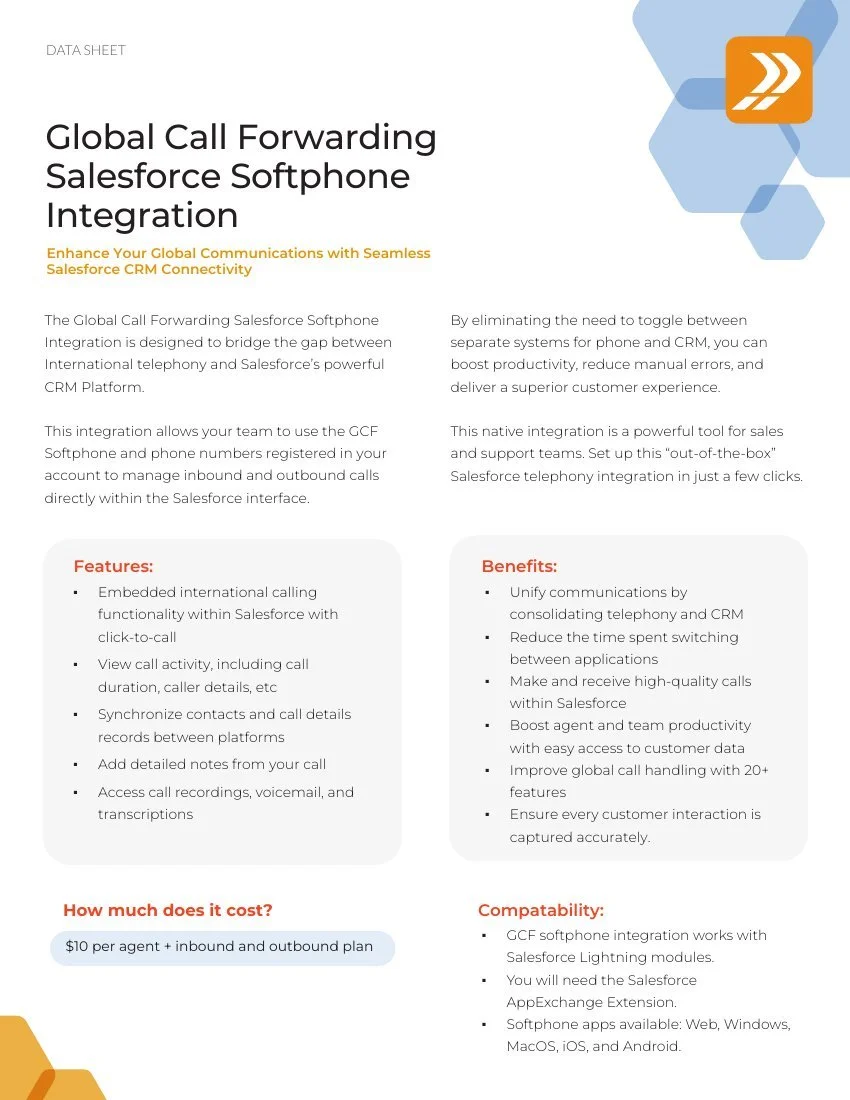
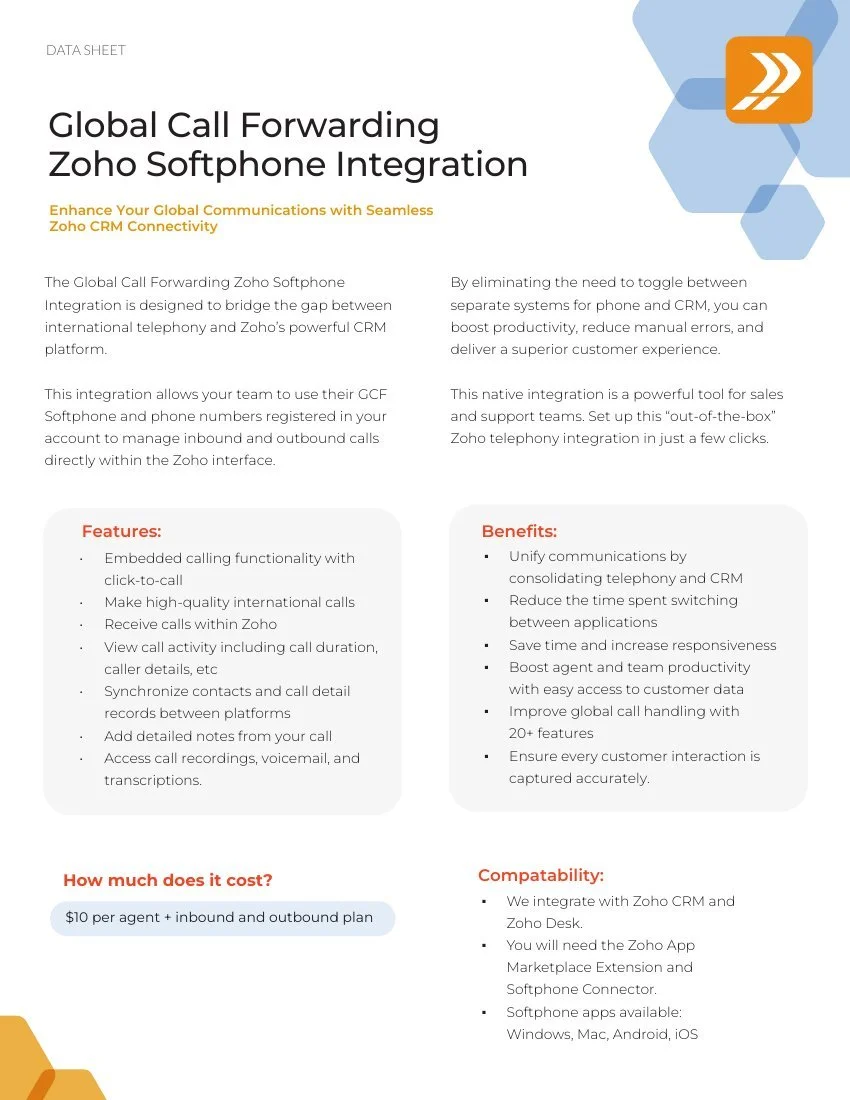
- Close the gaps. When third-party integration listings for Zoho and Salesforce went live before marketing saw them, I got listing access from IT, prioritized the assets we needed and pushed updates through quickly, then pushed for marketing to join launch planning earlier.
What I launched
AI feature
AI Call Insights
Transcription, summaries, sentiment and keyword search, positioned around business outcomes: understanding customers, reviewing support calls and spotting recurring issues.
Integrations
SIP and BYOC integrations
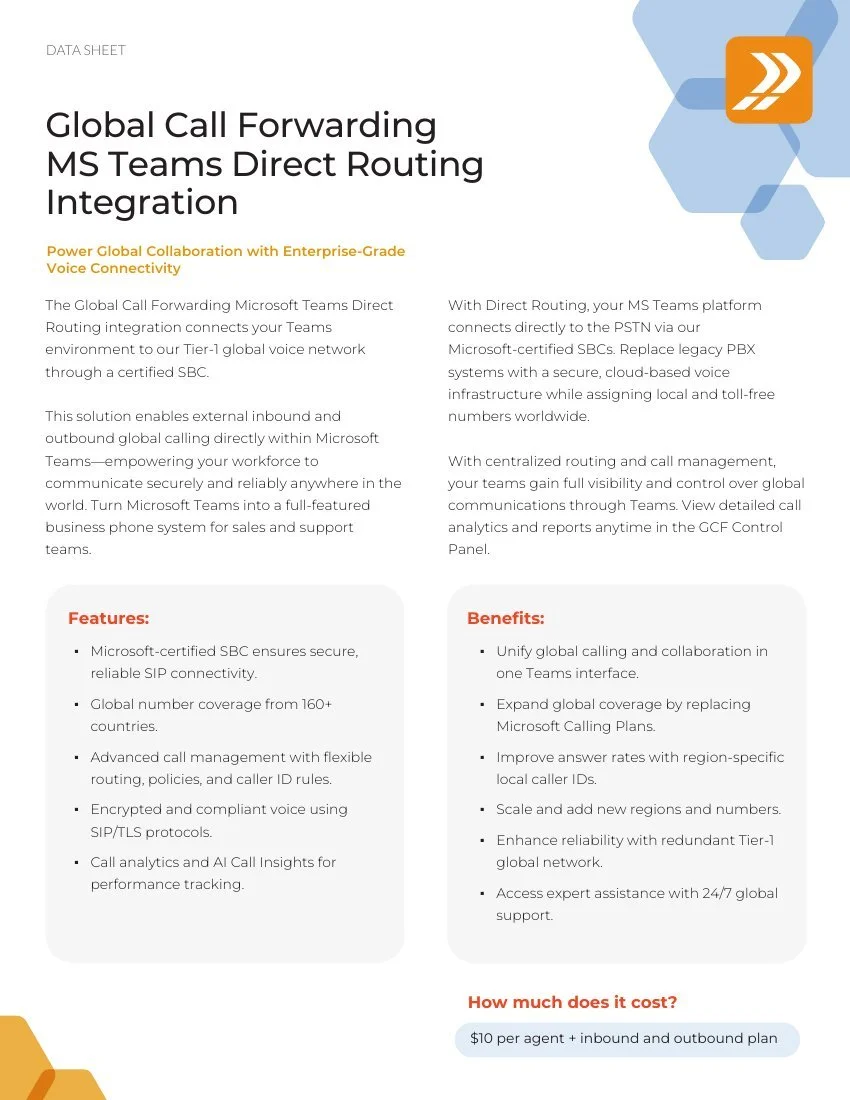
Microsoft Teams, Twilio and Genesys, plus Amazon Connect and Webex content, for buyers who want global numbers inside the phone system they already run.
Integrations library
Business app integrations
New integration pages for Zoho Desk, Intercom, Gorgias, HubSpot, Pipedrive, Odoo and Microsoft Teams in 2024.
Analytics
Custom Reports
A launch campaign bringing web content, video, email and social together around the new reporting feature.
Platform
Google and Microsoft sign-in
Announcement and PR for single sign-on in September 2026, plus softphone app and product update announcements.
Part 3 · Solutions
From features to customer problems
Buyers don't search for "SIP trunking." They search for a way to run a security hotline across time zones. I shifted content from product descriptions to industry and departmental solutions:
- Global security operations centers (GSOCs) and emergency hotlines [page in progress]
- Global IT help desks and internal support lines
- Regional customer service and sales hotlines
- CallMeClick callbacks for markets where toll-free access is limited
- International voice for managed service providers
What I made
One launch, end to end: AI Call Insights
For the AI Call Insights launch, I planned and produced the full kit with Product, Sales and Support: a feature page on each brand, an ad landing page, sub-feature pages and a supporting blog cluster, knowledge base setup guides, video scripts, an email to existing customers and an in-app announcement.
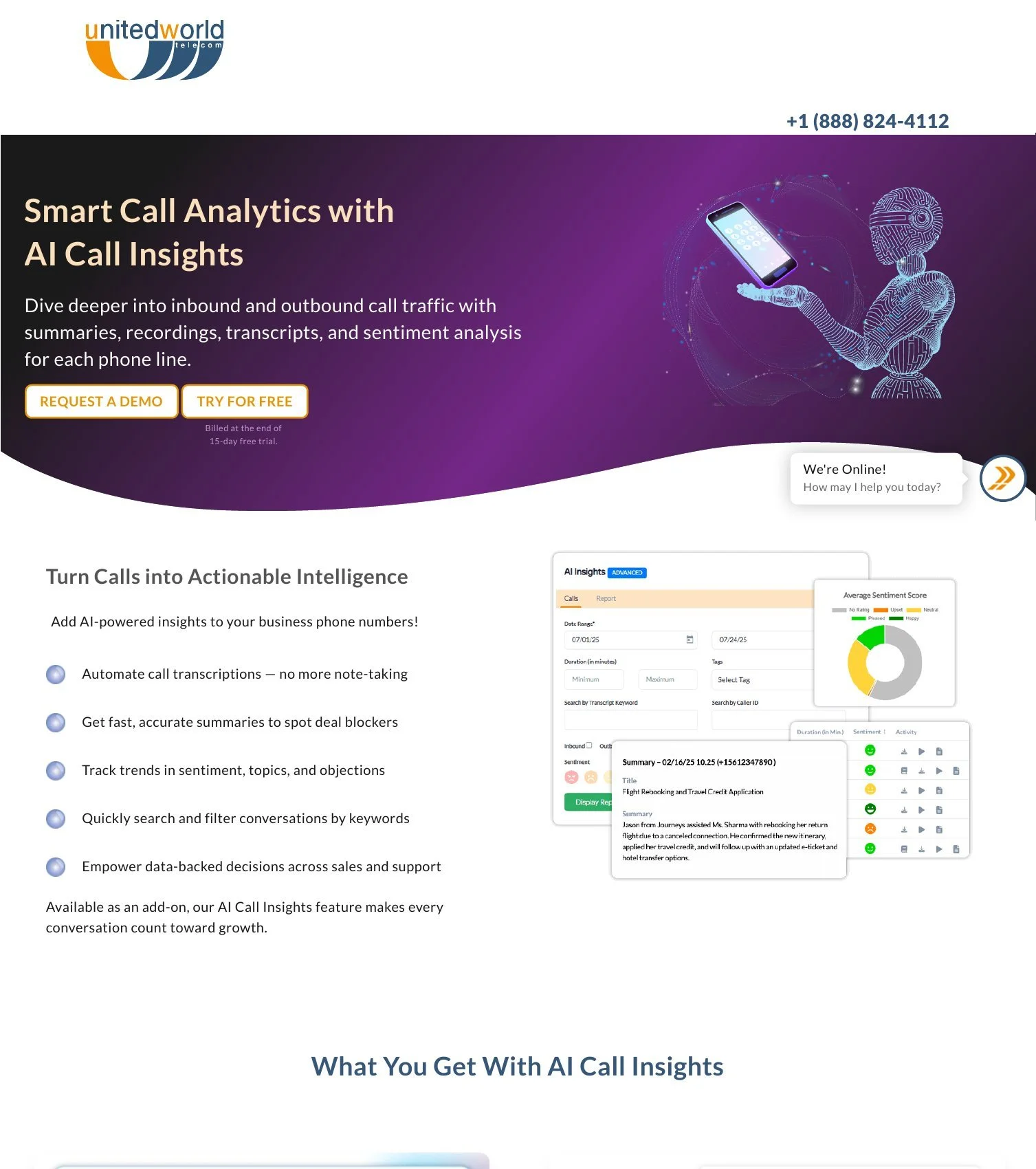
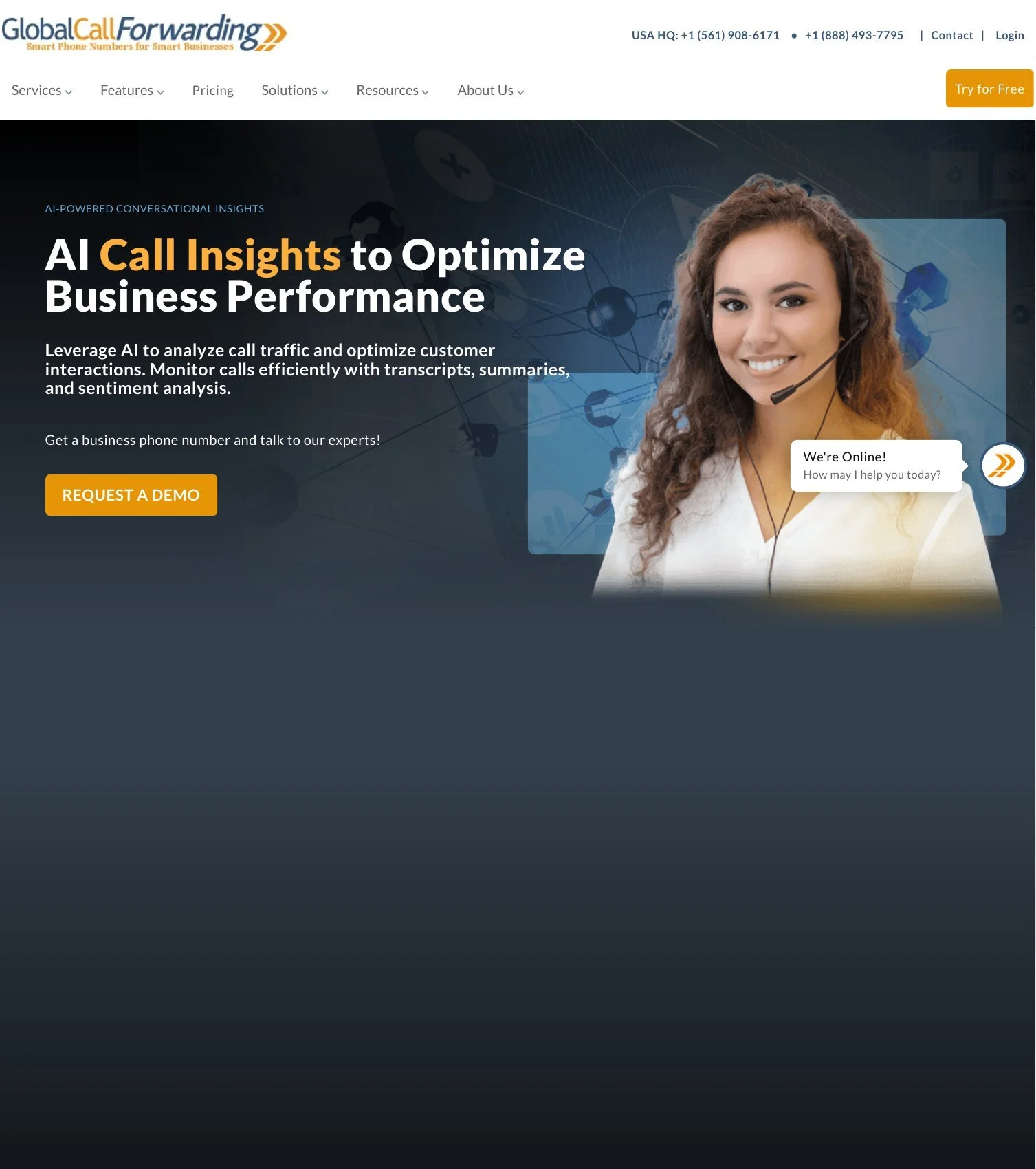
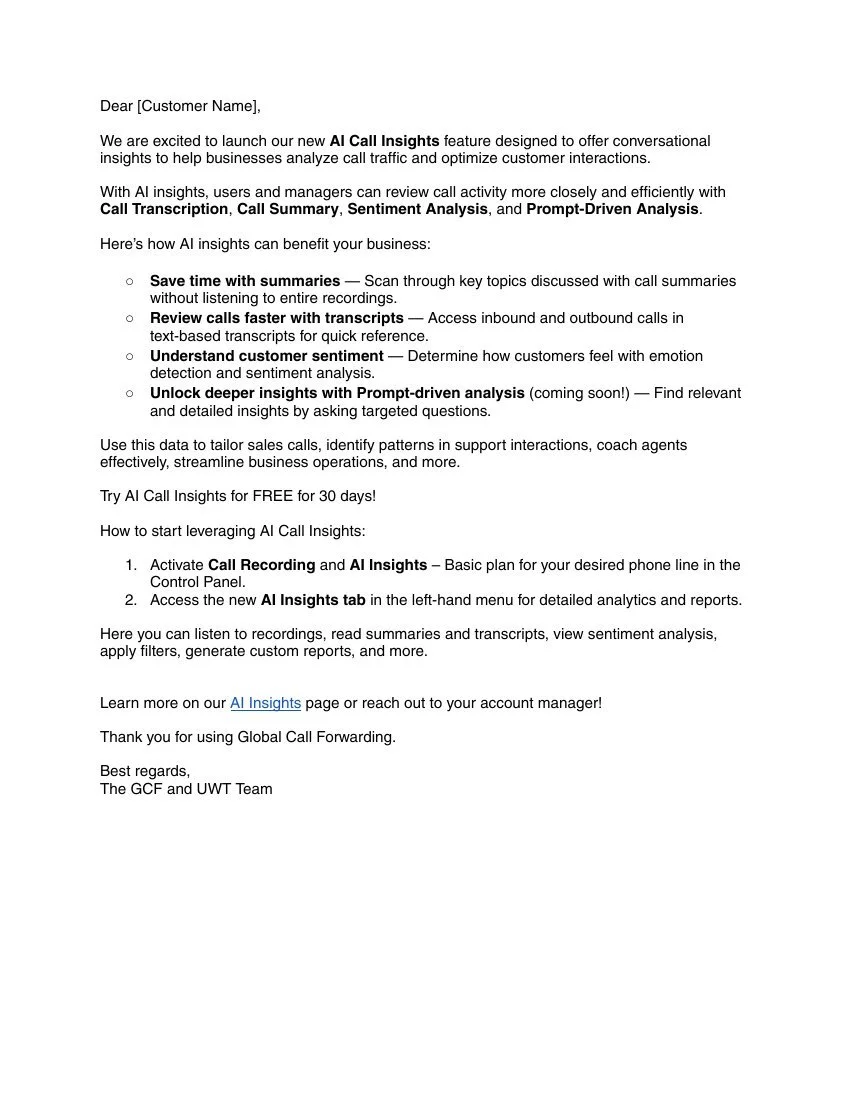
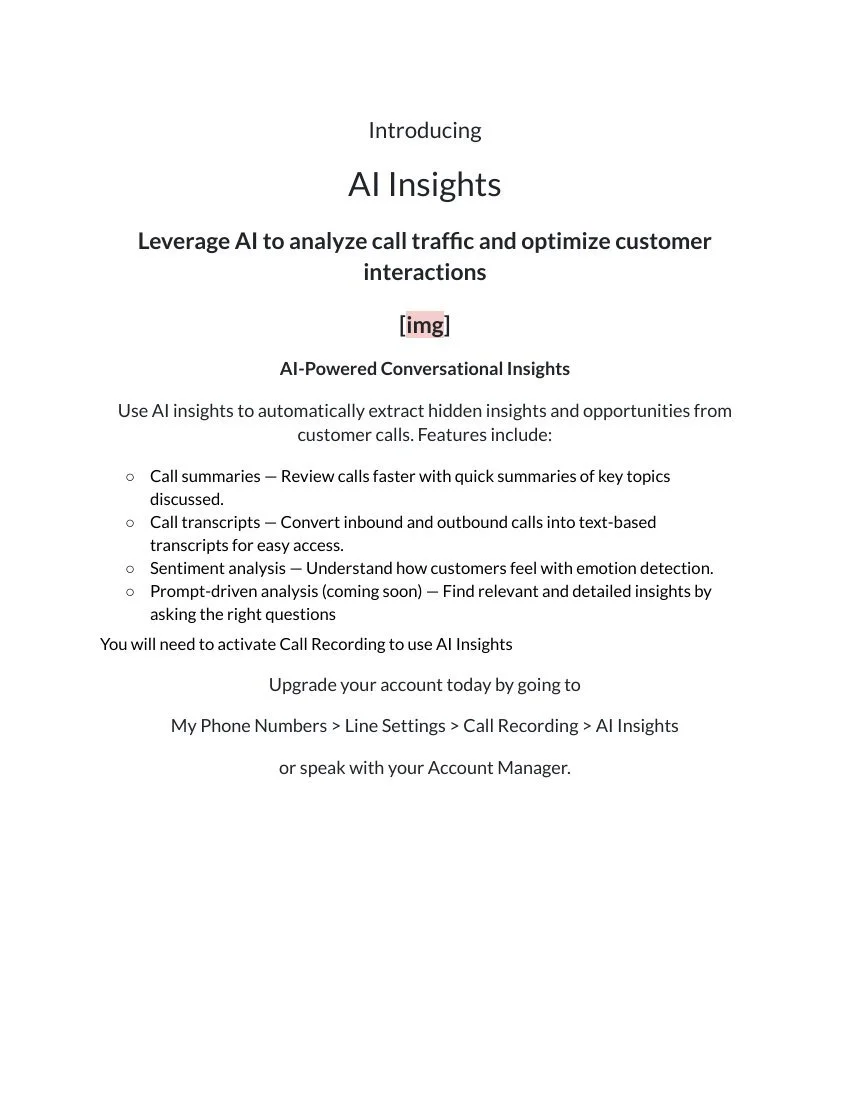
Also in the kit: sub-feature pages like call transcription, a blog cluster including integrating call transcripts with your CRM and using year-end call data for global voice strategy, knowledge base setup guides, and two videos from my scripts: a feature explainer and a setup walkthrough.
Built for technical buyers
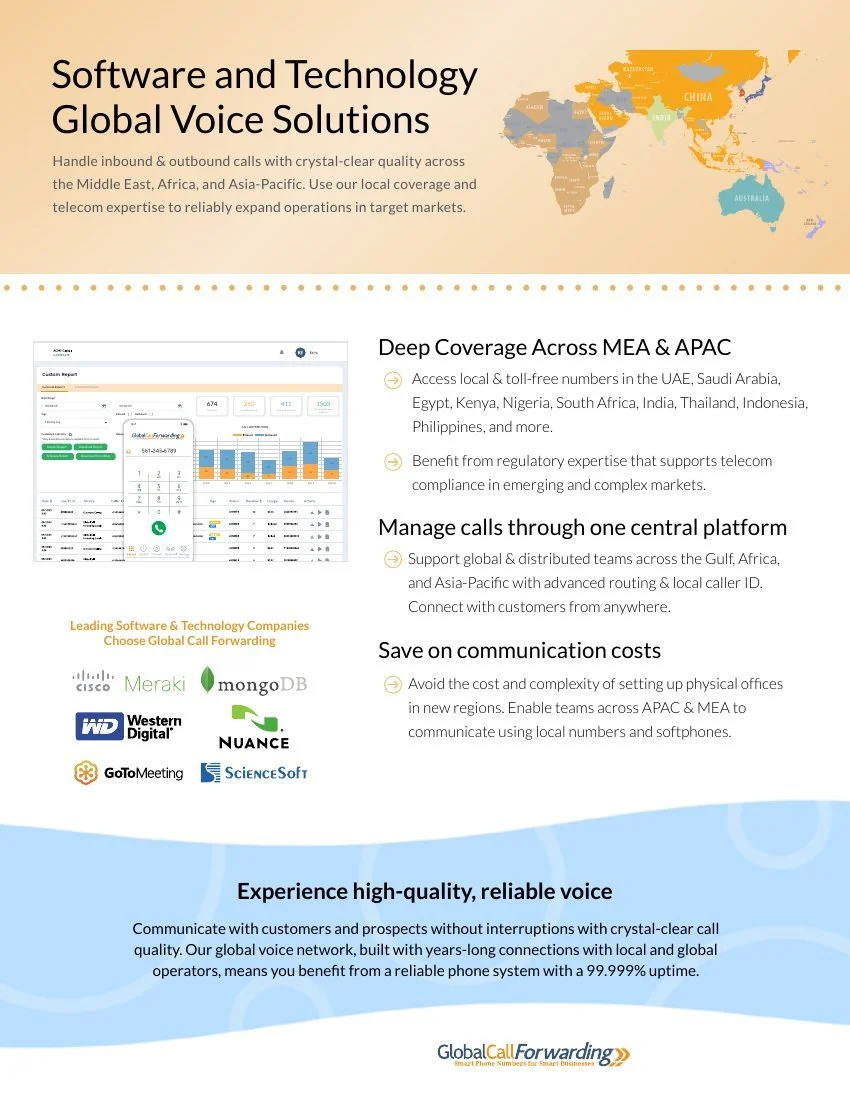
Datasheets and solution brochures for integrations and regional markets, used by the Sales team with prospects.
Read the work
Live pages and articles from recent launches and solutions.
Integration page · United World Telecom
Microsoft Teams Direct Routing
Global numbers, local caller ID and a certified SBC inside the Teams setup IT already runs.
Solution page · Global Call Forwarding
Phone solutions for IT and operations teams
A solution page written around the team's problem, not the product: one dashboard for numbers, routing, analytics and integrations.
Article · Global Call Forwarding · April 2026
Plug-and-play vs. backend voice integrations
Helps buyers choose between embedded softphones and SIP-level connections, the two halves of the "use our system or connect us to yours" positioning.
Article · United World Telecom · March 2025
How to integrate call transcripts with your CRM
Launch content for AI Call Insights that shows the business use, not just the feature.
Don't show every feature. Pick the three or four that matter and let the value lead.
Results
- Took 12+ features and integrations to market between 2024 and 2026, each with a coordinated web, enablement, knowledge base, control panel, email and social rollout.
- Paid conversions grew 47% in 2025, a year that included new Integrations and AI Call Insights campaigns on Google and Bing.
- The three-pillar positioning now guides the Global Call Forwarding website redesign.
- For AI Call Insights, I built a content cluster before launch. It brought in new traffic and gave Customer Success and Support the guides they used to help existing customers turn the feature on.
Reflection
I’d keep working closely with Sales, Support, product and leadership to see the whole buyer and customer journey, so each launch speaks to new prospects and existing customers at once. What I’d change is post-launch reporting. Today we can’t easily see adoption rates, and Sales feedback on new products is inconsistent, so before the next launch I’d set up adoption tracking and a regular feedback loop with Sales.
Next case study
From signup to upsell
How onboarding, enablement and lifecycle content helped shift new accounts from 30% to 84% business customers.
Read the case study Book a call Email me